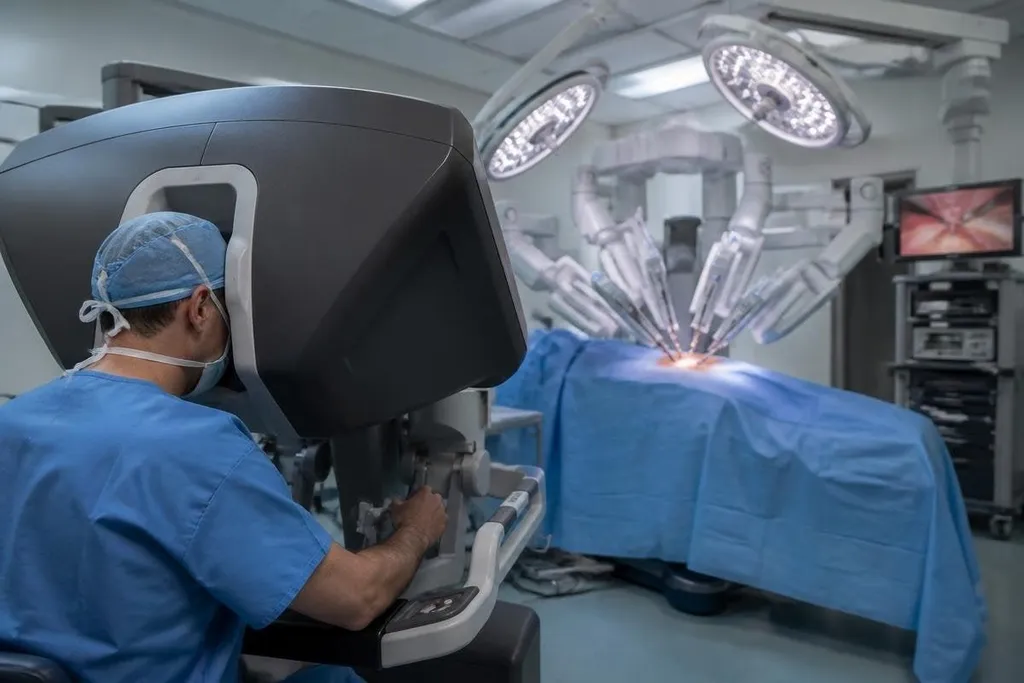
A surgical robot can steady an instrument, filter hand movement, and show a magnified view of the operating area. The next stage will depend on how safely these systems handle changing tissue, crowded operating rooms, and the decisions that stay with the surgeon.
- Robots will assist with defined tasks before they perform wider parts of an operation.
- Better sensing will matter as much as smaller instruments.
- Hospitals will judge systems by patient results, staff time, training, and cost.
From controlled tools to task assistance
Most surgical robots used today place the surgeon at a control console. The robot follows those commands through mechanical arms, cameras, and surgical tools. That setup can make fine movements easier to repeat, but it doesn't remove the need for judgment during an operation.
The next step is task assistance. A system might hold a camera at a steady angle, keep an instrument inside a planned path, or warn when a tool approaches a marked safety zone. These jobs have clear limits, so a hospital can test them without handing over the whole procedure.
More independent action will need a clear stop rule. Tissue changes shape, blood can obscure the view, and a planned path may become unsafe after one small movement. A robot that pauses and asks for control may be more useful than one that continues with a bad estimate.
Sensing will shape the next systems
A camera shows shape and color, but surgery also depends on force, movement, and the feel of tissue. Tactile sensors could give the surgeon more information about pressure at the instrument tip. Force limits could also help prevent damage when a tool meets resistance.
That data will need careful testing. A sensor can report contact without explaining what the contact means, and a software model can misread an unusual case. The machine must show its confidence in a way the surgeon can judge quickly, with a clear path back to manual control.
Robot makers may also work on smaller tools and easier movement around the patient. The practical gain would be less tissue disturbance and more room for the surgical team, but the claim needs proof from real procedures rather than a lab demonstration.
Planning software will matter only if it helps the surgeon during a real operation, where blood, movement, and limited access can change the task. Robot24.com can place those systems beside named procedures, test dates, and stated limits. The next test is the operating room itself.
The operating room is part of the test
A surgical robot has to fit the whole procedure. Staff need to move it into place, prepare tools, manage cables, keep the field clear, and respond if the system stops. A machine that works well in a test room can still slow a busy operating room if setup takes too long.
Training will shape adoption too. Surgeons need practice with the controls, but nurses and technicians also need clear steps for tool changes, faults, cleaning, and emergency removal. A hospital won't judge the robot by arm movement alone. It will ask how the system affects the full team.
Cost will stay close to every purchase decision. The price includes the robot, instruments, service, software, room changes, training, and time spent preparing each case. If a system needs special tools for every procedure, the running cost may matter more than its purchase price.
What autonomy can and can't prove
A robot may plan a path in a digital model or repeat a movement on a training setup. That shows a narrow skill. It doesn't prove the same action will work across different patients, tissue types, surgeons, or unexpected events.
A useful future system will show its limits in plain terms. Hospitals will need records of when the robot acted, when a person took control, and why the system stopped. Those records can support safety reviews and help teams find errors before they repeat.
I'd back gradual autonomy, with each new task tested on its own before systems join several tasks together. Surgery leaves little space for a software update that looked safe in a clean demo.
A practical buying checklist
Before a hospital backs a surgical robot, its team should ask:
- Defined task: Which movement does the system perform, and where does the surgeon take control?
- Patient evidence: Which procedures and patient groups have been tested?
- Failure response: What does the robot do when a sensor loses data or the planned path no longer fits?
- Team workload: How long do setup, tool changes, cleaning, and fault recovery take?
- Full cost: What do instruments, service, software, training, and room changes add to the purchase price?
- Recorded actions: Can the hospital review every automatic movement and manual takeover?
The next useful proof will be simple to describe: a surgical robot completes a defined task, across real cases, with a surgeon ready to take control and a hospital able to measure the result. Until makers show that record, precision remains a feature, not a reason to hand over more of the operation.